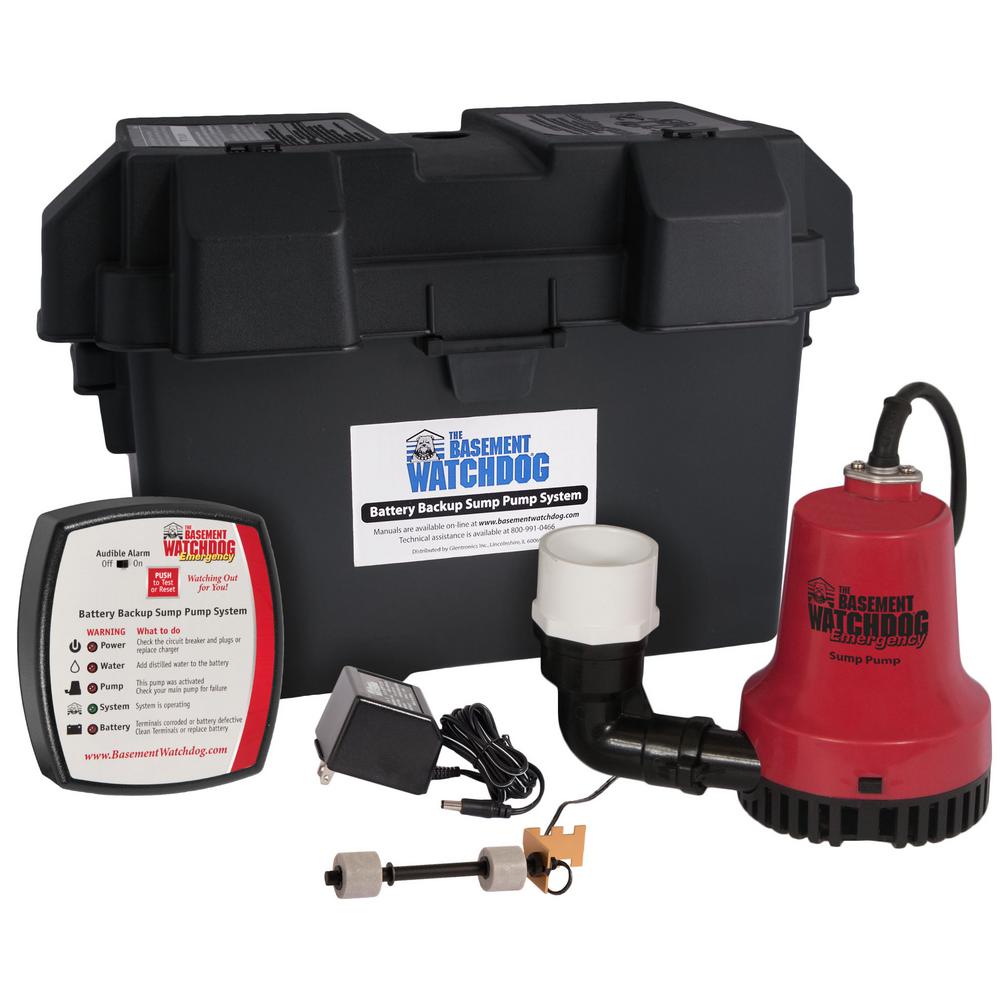
There are several reasons why you may need to buy a sump pump backup system. Living in a house with a basement that floods during heavy rainy season is just one of the reasons. You may also need to buy a system just in case you need to replace your existing system altogether. Sump pump systems are also widely used in both commercial and industrial applications to take care of water that accumulated on the surface.
What is Sump Pump Backup System ?
A sump pump backup system is basically a small water pump designed to be used in drawing out any water that ends up in your basement. This water can come in through various ways including from your house perimeter drainage system and just in case your basement is below the groundwater table. Leaving water to accumulate in your basement can cause a lot of damage, which includes weakening your house’s foundation. The pump is therefore designed to discharge water therein into the sanitary sewer (mostly found in old buildings).
Sump Pump Backup System : Buying Guide
You have two sump pump backup options when it comes to buying a sump pump; battery and water powered sump pumps. The difference between the two options is in a sump pump backup power source. A battery powered sump pump can be a stand alone or be part of a combination pump system where two small pumps are installed. In such a case, one pump that is the main pump will be a 120 V pump that is connected to your house’s electrical line. The other pump is usually a 12 V battery pump, which is the system’s backup that kicks in when there is a failure in the main pump or regular power failure with water in the basement. The backup pump normally runs between 2 and 4 hours. Additional batteries can however be connected in parallel to increase running time. Some are designed to switch on automatically when water in the basement overflows and switch off upon discharging the same.
Unlike a battery powered sump pump, a water powered sump pump backup system does not require electricity to operate. It connects to your house’s water supply piping, using the pressure therein to discharge any water in the basement sump. The amount of water it discharges depends on the amount of pressure in the piping system. The sump pump battery backup and water powered sump pump are the two recommended types of sump pump backup systems. Another system that is not however recommended is where homeowners make use of generators to provide electrical power when the main power supply fails. Although this system’s benefit is that a generator can run for a long time compared to a battery, you will need to be around to switch it off failure which your basement will accumulate a lot of water.
Things to Consider before buying a sump pump backup system
There are two major considerations you need to take into account when planning to buy a sump pump. The first definitely has to do with cost. Generally, a battery-powered sump pump system retails at a higher price than a water-powered system. On the other hand, a water-powered system relies on constant pressure from water supplied in order to operate. The pressure needs to be at a specific level. Any drop of pressure below the required level will render the pump un-operational. This makes it necessary to consider the amount of water that normally accumulates in your basement before you make a choice on which type to buy. The fact that sump pumps are available in different brands and models can also complicate matters for you. The best way to go about identifying the right brand and model is to find a sump pump backup review on a particular model or brand you are interested in.
Installation of Sump pump backup system
Installing a new sump pump backup in your basement requires proper preparation. You will need to ascertain where your utility pipes are located below the basement. In particular, ascertain the location of the sewer and water supply lines so that you do not bore into then when you begin to work on the basement floor. Because sump pump installation can be very involving, you need extra hands for help and if need be engage the services of a qualified technician to carry out the installation.
Being a mechanical device, your sump pump is susceptible to malfunction. One of the problems you may experience is where a sump pump is not capable of discharging water from the basement effectively. This is usually a major problem with substandard sump pumps (featuring plastic components) that retail at cheap prices. You may also experience a problem where a sump pump gets clogged with dirt, which slows down its performance. This is usually the result of leaving a sump pump’s lid open for long periods of time, especially when it is operational. These are minor sump pump problems that you can easily prevent and let your sump pump backup system serve its purpose efficiently.